


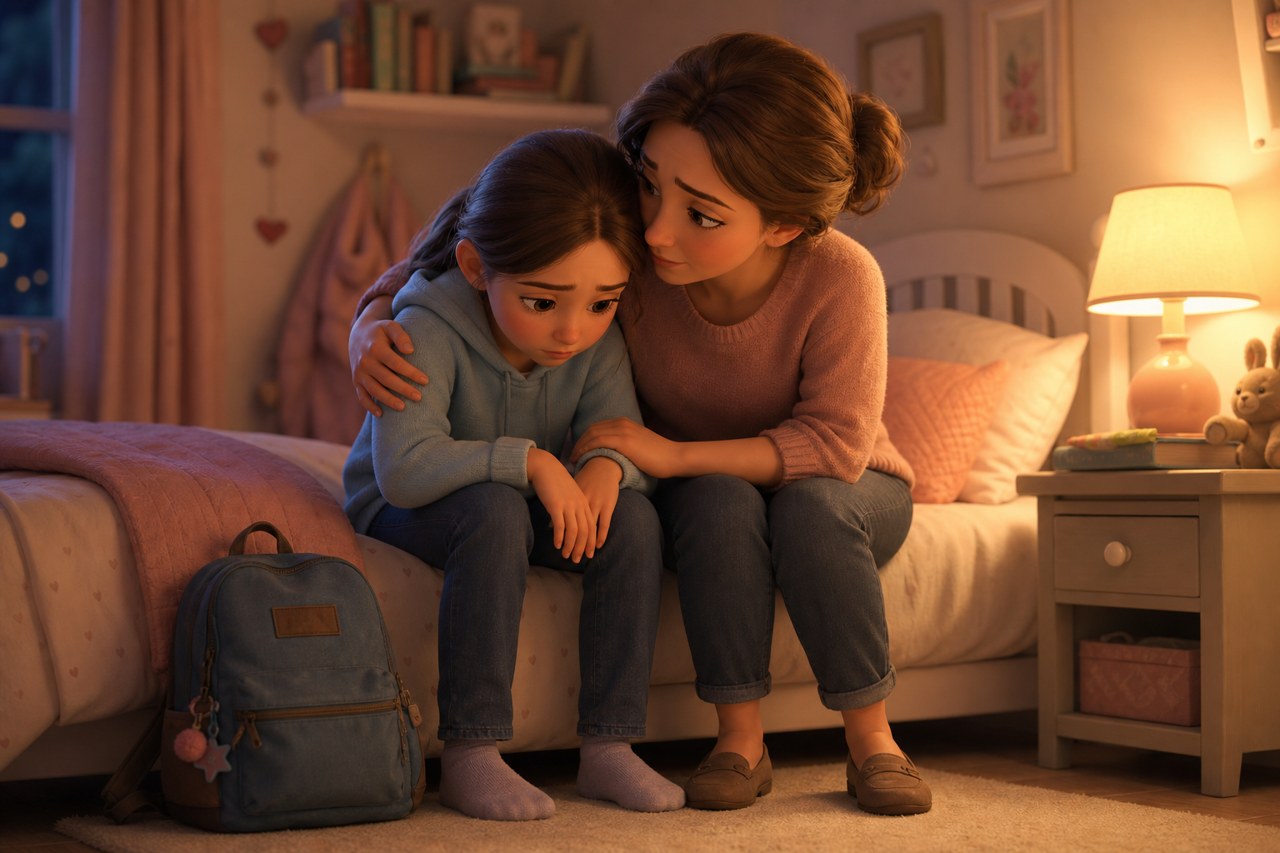
You found out in the worst way — a note from the teacher, a bruise explained too quickly, or the quiet confession at bedtime: "Some kids at school are mean to me."
Your body reacted before your mind did. Heat in the chest. The fierce, ancient thing that rises in a parent when their child is hurt. That reaction is right and good — and the next few minutes matter too much to hand to it.
Because here's what's at stake: bullying does its deepest damage not through the incidents themselves but through the story a child builds to explain them. There's something wrong with me. I deserve this. If I were different, this wouldn't happen. The events are outside your control. The story is where you come in.
What should you say first when your child tells you they're being bullied? Say: "I'm so glad you told me. That took courage, and this is not yours to handle alone." Before questions, before action plans, before "what did you do back?" — your first sentences must accomplish two things: make telling you feel safe (so they keep telling you), and separate what happened from who they are. Everything else can wait ten minutes. These two can't.
First conversation: what to say
"I'm so glad you told me." Children often hide bullying for weeks — out of shame, or fear of making it worse, or protecting you from being upset. Reward the telling itself, every time, or it stops.
"This is not your fault. Nothing about you caused this." Say it plainly and early, even if they haven't voiced the worry. They're thinking it. Bullied children almost universally construct a self-blame story, and they build it fast.
"What they said is not true about you. Words can hurt without being true." This is the crucial distinction, and children don't make it on their own. A child assumes painful words are painful because they're accurate. Separate the two out loud: "It hurt because it was cruel — not because it was true."
"You are not weak for feeling this. It's supposed to hurt when people are cruel." Especially for boys, who often absorb the idea that being hurt by words is itself a failure.
"We're going to handle this together. You won't do any of it alone." Note the word together. "I'll take care of it" makes them a bystander to their own story; "handle it yourself" abandons them. Together is the word that builds both safety and agency.
And then: listen longer than feels natural. Ask "What happened next?" and "How long has this been going on?" in a calm voice. Take it seriously without escalating emotionally — if your reaction is bigger than their pain, they'll manage your feelings next time instead of telling you.
What not to say
Every one of these comes from love. Every one of them backfires.
- "Just ignore them." Tells your child their strategy (telling you) was wrong, and hands them back a problem that adults couldn't solve with the same advice.
- "Hit them back." Whatever your views on self-defense, as a first response it communicates: this is yours to fix physically, and telling me was the wrong move.
- "What did you do to provoke it?" A reasonable investigative question that a hurting child hears as this is partly your fault. If you need facts, get them later, gently, sideways.
- "Kids will be kids." The story your child takes from this: what happens to me doesn't matter much.
- "You need to toughen up." Now they're being bullied twice.
The identity repair (the part most advice skips)
Practical steps stop the bullying. They don't undo what it taught your child about themselves. That's a separate repair, and it happens in the quiet moments for weeks afterward — mostly at bedtime, when the day's armor is off.
The principle: a cruel voice loses its power when a louder, more constant voice already occupies the space. You can't argue the cruel words out of their memory. You can out-repeat them.
- "You are kind, and you are brave, and one kid's cruelty doesn't get to rename you."
- "God made you on purpose. Nobody at that school gets a vote on that."
- "What that kid sees is not what's true. I know what's true. I've known you your whole life."
- "You are already loved — before school, after school, on the worst day and the best one."
One of these, most nights, for longer than you think necessary. Identity wounds close slowly, and they close from the inside.
Taking action (without going around your child)
- Document. Dates, names, what happened, who saw. Facts move schools faster than feelings.
- Contact the teacher first, factually and in writing: here's what's happening, here's the pattern, what's the plan? Escalate to administration if the pattern continues — most schools have formal anti-bullying obligations.
- Keep your child informed. "I emailed Ms. Park today. Here's what she said." Secret adult maneuvers teach a child that things happen about them, not with them.
- Watch the trend line, not the single incident. One bad recess is childhood. A pattern targeting your child is bullying, and it warrants adult intervention every time.
- Get help if the wound is deep. Changed sleep, dread of school lasting weeks, statements like "everyone hates me" or "I wish I wasn't here" — bring in a counselor and your pediatrician without hesitation. That's not overreaction; it's the together you promised.
The long view
Years from now, your child may not remember the name of the kid who was cruel to them. But they will remember, in their body, what happened when they told you — whether the telling made things safer or lonelier, and whose voice won the argument about who they are.
Make sure it's yours. Make sure it was already there, repeated so many times that when the cruel voice showed up, it found the space occupied.
Keep going
- Bedtime Affirmations for Kids: 25 Phrases That Build Identity and Calm Anxiety — the nightly repair toolkit.
- What to Do When Your Child Says 'I'm Bad' — when cruelty starts becoming self-talk.
- The Power of Repetition: Why Saying It Once Isn't Enough — why the repair works.