


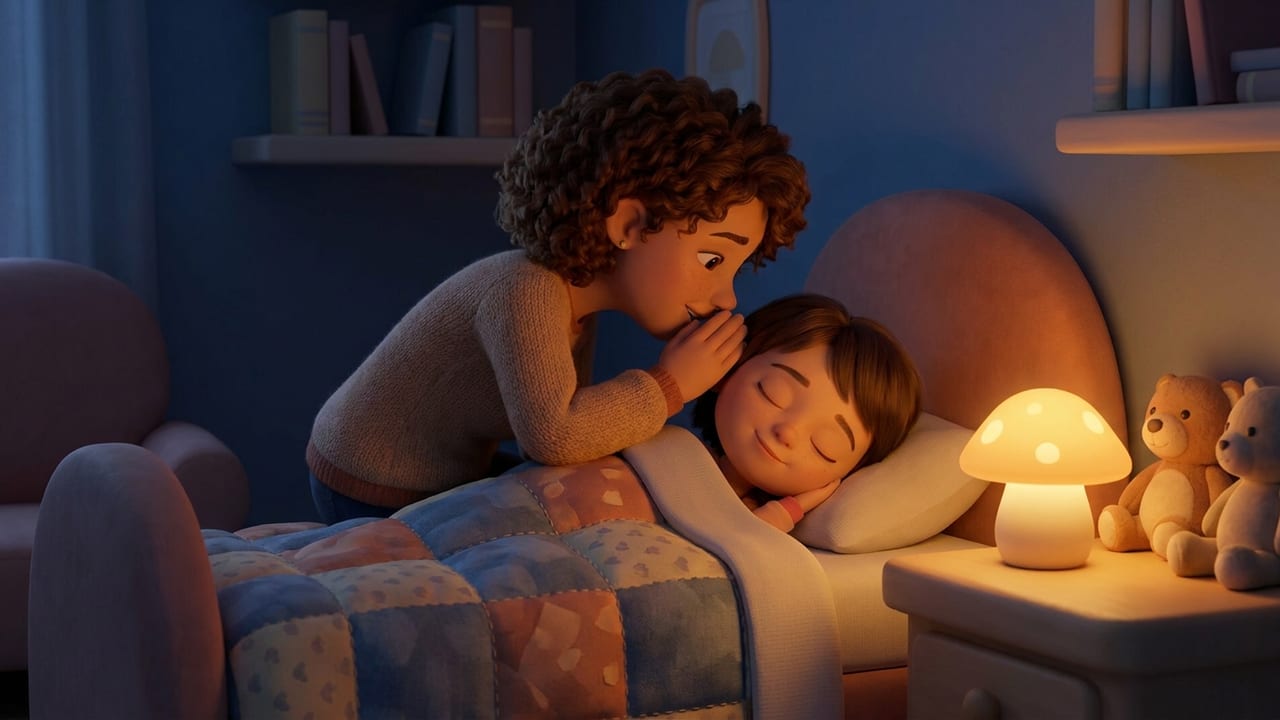
The books are beside the bed, but tonight you want to choose one with a little more intention. Perhaps your child has asked where they came from, wants another Bible story or simply wants you close for a few minutes.
Choose a Christian bedtime book by its purpose, language and fit for your family. A Bible storybook, a picture book about belonging and a personalized story are different kinds of reading. None can guarantee a child's confidence, faith or sleep.
We make AlreadyLoved, one of the books included here. This is an editorial comparison based on publisher descriptions and current AlreadyLoved product information, not an independent test or a claim that we have read every edition. Check samples before buying.
Four books at a glance
| Book | What it offers | Consider it when… | Check before choosing |
|---|---|---|---|
| God Gave Us You | A picture-book conversation between a mother polar bear and her cub | Your child is asking about being welcomed into the family | Whether its family and birth story fits the conversation you need |
| The Jesus Storybook Bible | Retellings of Bible stories connected to Jesus | You want to explore biblical stories together | Story length, language and the edition |
| God's Very Good Idea | A story about God's diverse family and the gospel | You want to talk about people, differences and belonging | Whether you want the storybook or the separate board-book edition |
| AlreadyLoved | A personalized Christian children's book | You want a read-aloud featuring your own child | Current personalization, format, preview and ordering details |
God Gave Us You: a conversation about being wanted
Lisa Tawn Bergren's picture book, illustrated by Laura J. Bryant, uses a polar-bear family to explore a young cub's question about where she came from. The publisher describes a mother's reassurance that the cub was wanted.
That makes it a possible starting point for talking about being welcomed. Check the sample first: a birth or family story may need explanation or adaptation for your own family.
A question to try afterwards is, “What would you like to know about when you joined our family?” Let your child's answer guide whether there is more to say tonight.
See the publisher's description of God Gave Us You.
The Jesus Storybook Bible: exploring Bible stories together
Sally Lloyd-Jones's book, illustrated by Jago, connects its retellings to Jesus. It serves a different purpose from a single picture-book story or a personalized book.
Read a sample story to judge the language for your child. A storybook is a retelling, so families may also want to read the corresponding biblical passage together at another time. You do not need to finish a section if your child has had enough.
A question to try is, “What did you notice about Jesus in that story?” There is room for “I don't know” as well as a longer conversation.
Explore the book on the author's website.
God's Very Good Idea: talking about God's family
Trillia J. Newbell's storybook, illustrated by Catalina Echeverri, presents human diversity within a gospel story. The publisher also offers a separate board-book version, so check which edition you are considering.
This is an option for a family wanting to talk about how people differ and how we treat one another. Preview the story to see how it fits your child's questions and your family's language about faith.
You might ask, “Who did you notice in the pictures?” Start with observation instead of turning the reading into a quiz.
See the storybook at The Good Book Company.
AlreadyLoved: a personalized read-aloud
AlreadyLoved is our own personalized Christian children's book. It is intended for families who want a story featuring their child and language about beloved identity.
Personalization is a reason to consider it, not a promise about how a child will respond. Review the book page for current features and formats, and the FAQ for ordering questions. Let the parent provide or approve any child details used to create it.
A question to try while reading is, “What do you notice about this page?” Some children will want to talk. Others will simply want you to turn the page.
How to choose for tonight
Open a sample and read a page aloud. Does the language feel natural in your voice? Is the story a length you can enjoy together? Does it invite the conversation you want to have without asking your child to perform a particular response?
Consider borrowing a book from a library before buying. If you are giving it as a gift, ask about books the family already owns and their preferred Bible storybooks.
For a younger child, check the format as well as the story. A board book and a longer illustrated storybook can have very different uses, even when their titles are similar.
Does bedtime make a book more effective?
Bedtime can be a convenient time to read together, but it is not a special guarantee that a message will change a child's identity. Some families enjoy reading at breakfast, after school or during a quiet afternoon.
Choose a time that works for you. You can pause, answer a question or stop early. The book supports the time you share; there is no required emotional result.
For ideas after the story, see our bedtime affirmations for kids. Treat suggested phrases as invitations to adapt, not a script you must complete.
Do you need more than one book?
No. Start with a book you and your child are interested in reading. Different books can introduce different conversations over time, but a large collection is not a parenting requirement.
If you are choosing a keepsake, a short personal note can make an ordinary book yours. Our baptism-book inscription guide includes examples you can adapt.
Reviewed September 4, 2026. Publisher sources are linked beside each book. Prices, stock and editions can change; check the seller's current information.